
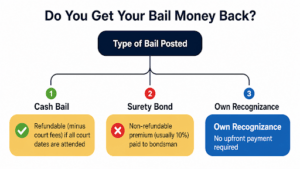
Many individuals ask, “Can you get bail money back?” The answer is nuanced, as bail refund in Ohio depends entirely on the type of bond posted and the outcome of the court proceedings.
If you or a loved one has recently faced criminal charges, the legal process can feel overwhelming. One of the most pressing concerns after a release from jail is understanding the financial implications of your bail.
Navigating pretrial release requires understanding the distinctions between different bond types. A cash bail deposit is held in trust by the court, whereas a surety bond involves a non-refundable premium paid to a professional bail bondsman.
In some instances, defendants may be released on their own recognizance or through a Signature or Own Recognizance agreement, which requires no upfront payment. For those who must post a cash bond or a surety bond, understanding how to secure a bail refund is vital.
This article will clarify the lifecycle of your funds, how to track your case through the Clerk’s Office, and what steps to take to ensure you are eligible for the return of your bail money at the conclusion of the case.
When Is Bail Returned?
Cash bail or a cash bond is typically returned to the payer once all court proceedings are completed and the defendant has complied with all court conditions, regardless of the trial’s outcome.
The purpose of bail bonds is to ensure that the defendant appears at their court dates, so if the defendant fulfills this obligation without incident, the bail amount is refunded. However, deductions for administrative fees or charges may be made if specified by the court. If the defendant fails to appear in court, the cash bail may be forfeited, and the payer will not receive the funds back.
It’s essential for all involved parties to understand the specific court and jurisdiction rules regarding cash bail refund to avoid any unexpected financial losses.
Call (614) 221-0100 today to speak with our experienced Ohio bail bondsman!
What Is a Secured Bond?
A secured bail bond is a type of bail bond that requires collateral before a defendant can be released from jail. The collateral helps protect the bail bondsman if the defendant misses court or violates the conditions of release.
Collateral may include cash, real estate, vehicles, jewelry, or other valuable property. The exact type and amount of collateral depends on the bail amount, the risk involved, and the bail bond company’s requirements.
With a secured bail bond, the person arranging the bond usually pays a non-refundable premium to the bondsman. This premium is the cost of using the bail bond service and is not returned, even if the defendant appears at every court date. The collateral, though, may be returned once the case is finished and all bond conditions have been met.
A secured bail bond is different from cash bail. With cash bail, the full bail amount is paid directly to the court and may be refunded after the case ends, minus any court fees or deductions. With a secured bail bond, the bail bondsman posts the cash bond with the court, and the premium paid to the bondsman is not refundable.
If the defendant fails to appear in court, the court may forfeit the bond. In that situation, the bail bondsman may become responsible for the full bail amount and may use the collateral to cover the loss. This is why it is critical for the defendant to attend every court date and follow all court-ordered conditions.
In short, a secured bail bond can help someone get out of jail without paying the full bail amount upfront. The key thing to understand is this: the bail bond premium is not returned, but collateral may be released after the case is closed if the defendant meets all court obligations.
Bond Forfeiture
Securing a bail refund is contingent upon your strict adherence to the conditions set by the court. When a judge grants pretrial release from jail, they often impose specific cash bond conditions, such as travel restrictions, mandatory check-ins, or a no-contact order, depending on your criminal history.
Failure to appear at any scheduled court date for criminal charges can result in the issuance of a Failure to Appear Warrant, which typically leads to the immediate forfeiture of any posted bail bonds.
If you posted a cash bail or cash bond, the court may declare the money forfeited, meaning the funds are transferred to the jurisdiction’s general treasury. If you utilized a surety bond, your bail bondsman is liable for the full amount, which may lead them to revoke your bond and surrender you to the correctional facility.
In some cases, if you have a valid reason for missing a hearing, your attorney may file a Motion to Modify Bond or request an exoneration order to halt the forfeiture process.
It is important to recognize that even when a case concludes successfully, the road to recovery of funds is not always automatic. Many jurisdictions deduct an administrative fee or outstanding court fees from the total cash bond amount before issuing a refund.
If you are dealing with a Cash Only bond, you must ensure that your documentation, such as the original cash bail receipt or a pink bond receipt, is preserved.
For those who used property bonds or collateral, releasing these assets requires complex paperwork submitted to the Clerk’s Office. If you are struggling with bureaucratic issues, such as a missing refund check or processing delays, you may need to file a formal request or contact the court’s financial department.
Remember that the ultimate goal of the bail bonds system is to ensure community safety and appearance in court; once the legal obligations are met, the court serves as the custodian of your funds until the official conclusion of the case.
If you have any questions regarding your specific status, speaking with your bail bondsman or contacting a legal professional is the most effective way to protect your financial interests.
Our Ohio bail bondsman is available 24/7, call us (614) 221-0100!